
Recalibrating
Early 2026 and its visions, an interview, art, book groups, and more

Checking back in, dear readers, after a long pause. I didn’t even get a year-end post out in December. At this point there is no “catching up” on the tumultuous and full past year. So I find myself needing to return to basics: start again, where I am, not where I’d like to be. And here we are: 2026.
This first post of the year has a few sections: thoughts on collective visions at the turn of year; new seasonal book groups; an interview with a luminous artist, thinker, and activist (if you look at any section, let it be this!), including her work against ecofascism; and finally, a few of my “recents.” Thanks as ever for reading.
An unsettled 2026: refusing inevitability, imagining what could be
“We’re in trouble.”
This was probably my most-thought thought of 2025 (and, if you ask my spouse, probably my most-verbalized thought as well, as we discussed the problems du jour many evenings). You probably understand why this phrase is already leading in the 2026 contest as well.
This is not a new or deep thought. Nor does it reflect a new reality. We’re a deeply unwell society. And we have been for a long time. (I’m writing from the U.S., where most of you are reading from, too.) The last few years have made it plainer. Some of us have been insulated from personally encountering the full reality longer than others.
But here we are. Insert the litany of political horrors that come to your mind. Again, out in the open—but largely not new.
I find myself thinking, once again, about where we go, mentally and physically, when we find ourselves in trouble.
Do we go one of two common ways?
One direction is to seek homeostasis through convincing ourselves “it’s fine” or refusing to see what’s playing out around us. This direction is governed by normalcy bias. This is what leads others to observe, “we are severely underreacting” (and yes, I think we are). This looks like refusing to engage political topics or actions because it makes us uncomfortable or because we haven’t felt the effects—yet. Some of us have a perceived state of innocence, or ignorant bliss, to preserve. Others, not so much.
Another direction we can go in troubling times is toward resignation to what is, even doomism. For example, there is plenty of online discourse these days about how “we’re cooked.”
And while I think this phrase is usually a shorthand for “we’re in serious trouble,” there is also currently an undercurrent of inevitability, even nihilism. Of things being in motion that can only turn out one way. (With all respect for those elders who have grappled with and see the importance of despair in political action, I don’t think the popular usage of “we’re cooked” is usually so deep.)
Both of these approaches try to create some breathing room between ourselves and hardship. This is understandable, from a human and psychological standpoint. I am sympathetic. In fact, some days, I oscillate between some version of each of these poles in different hours.
Understandable as they may be, neither approach is up to the task of an historical moment that means so much for the preservation of people and planet. Neither is very activating.
As a climate activist, I’ve had to learn the difference between “we’re in trouble” and “we’re cooked” (or worse).
Alaina Wood put it this way, and I’d lift it up as a challenge to us all:
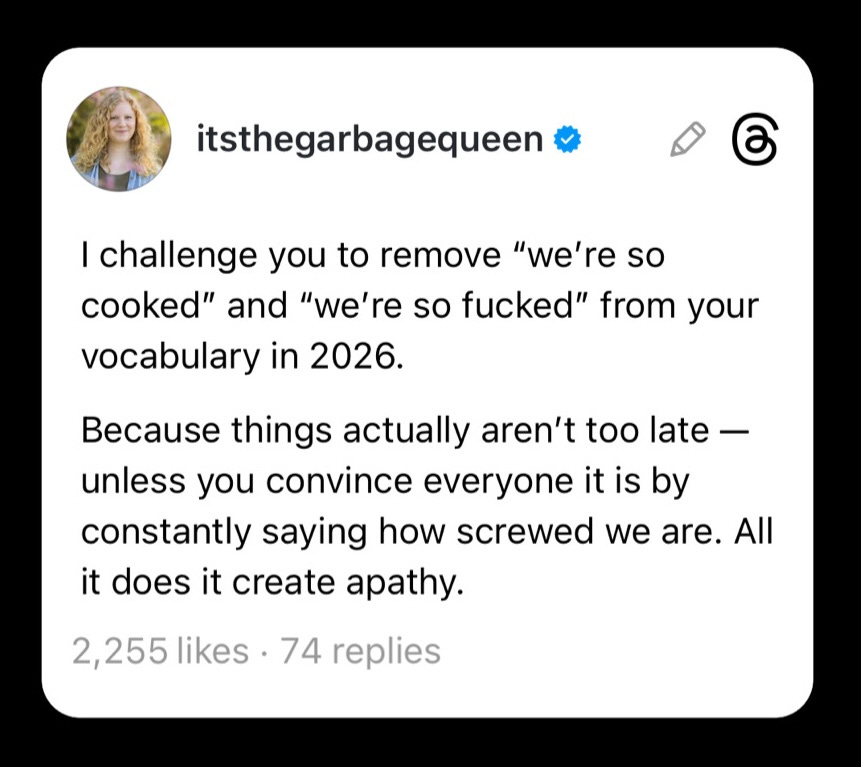
There is a third way besides being fine or being cooked: Strap in. Reject helplessness. Refuse to resign ourselves. Serve neighbors. Grow community. People are doing exactly this, in many forms, across this country and in many countries, even if it rarely makes mainstream news. As Whitney Alese put it, looking in the rearview mirror:
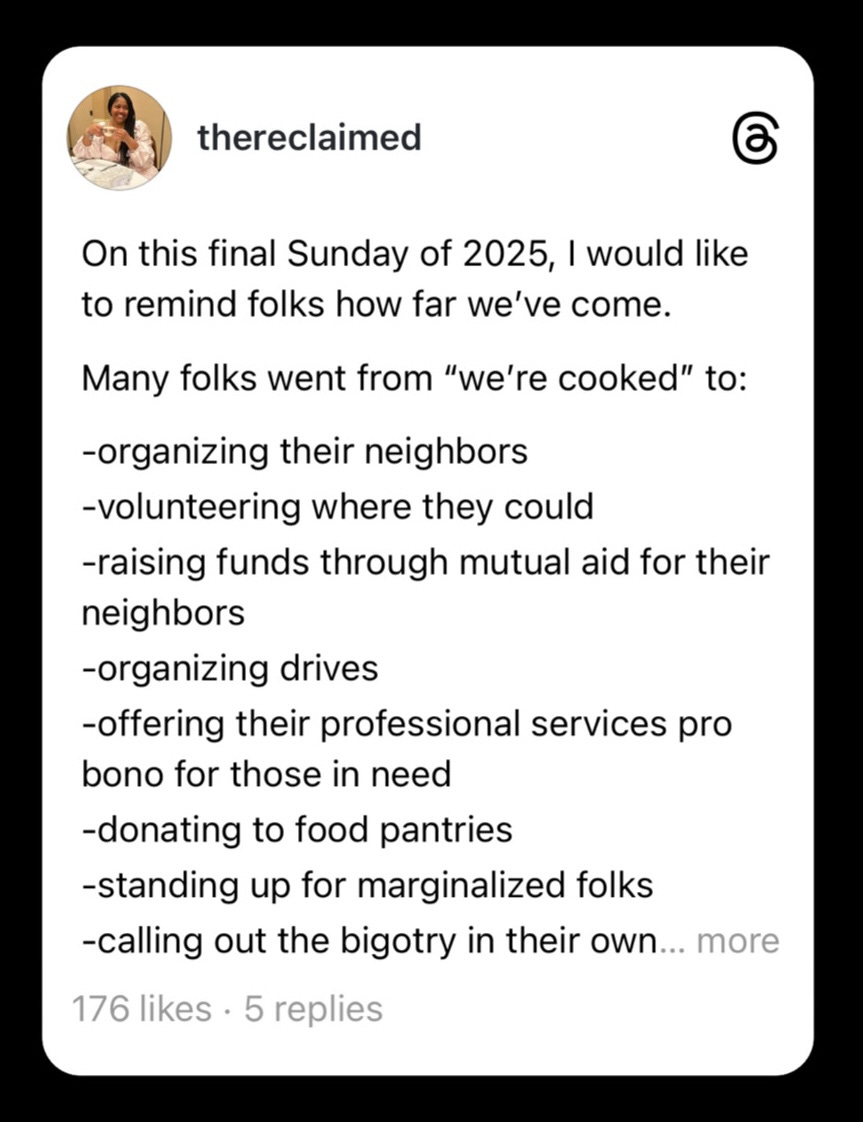
This to say, if you’re finding it difficult to get traction on a new year, when there is so much collective precarity in the system: it’s not just you.
But let’s accept that, and then look around and ask:
Where can we be in touch with our feelings that will help us activate, not numb out, pretend, or succumb to doomism?
Where can we care for people on the hyper-local level?
What communities and other sources of courage can we draw on in order to refuse certain political visions?
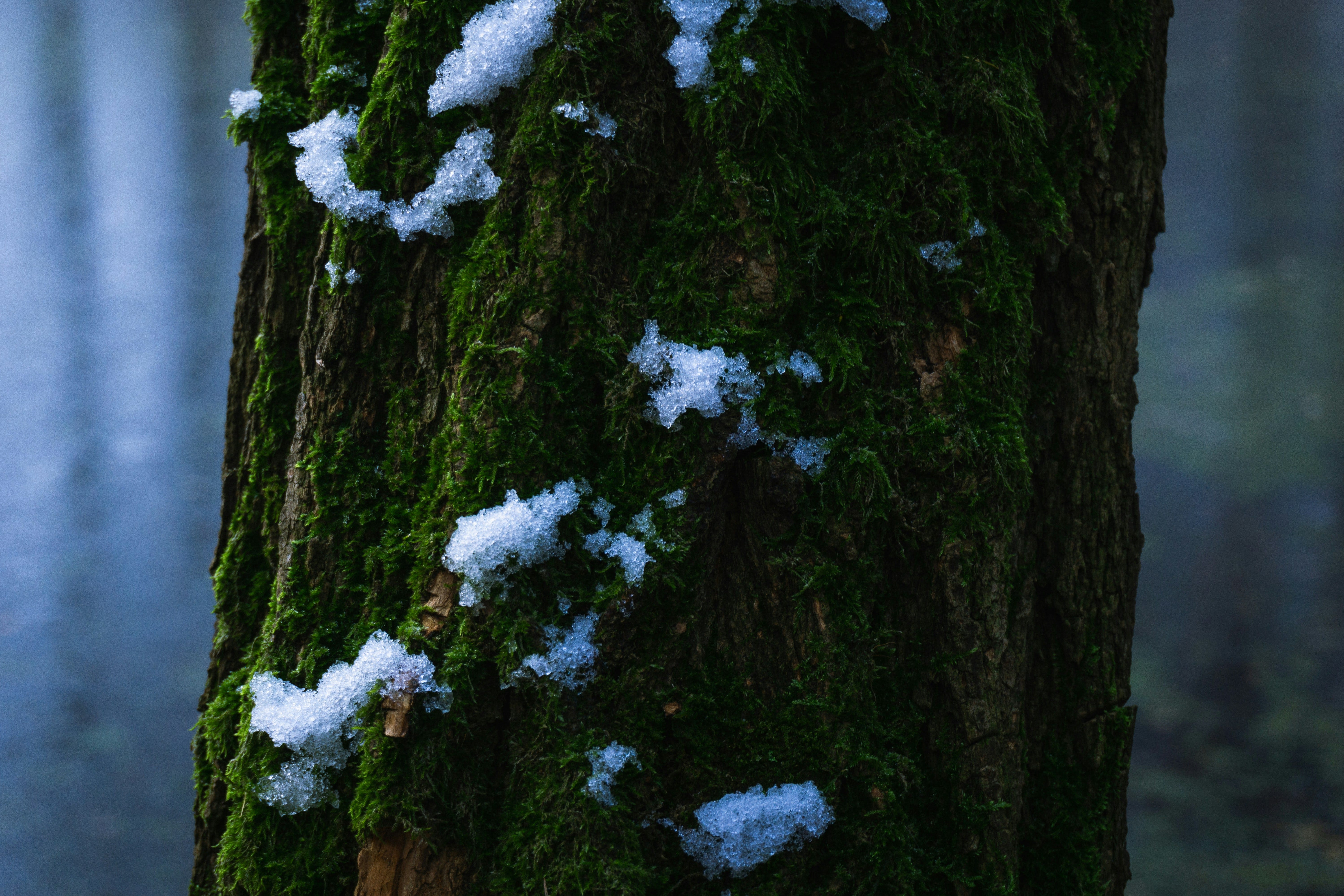
Who is already doing this work, showing what continuous life looks like within a place—like moss in a winter forest?
While we need to answer these questions for ourselves, forms of art—and other sources—can feed our imaginations and provide us the vision to do so. Art can “recalibrate our spirits” for refusal and restoration, especially when facing something of the magnitude of the climate crisis/the polycrisis. More on that below!
Imagination helps us not foreclose on visions of what could be based on what currently is. On this, I commend Dr. Tressie McMillian Cottom’s words, which were circulating online in this clip for good reason:
“When people try to sell you on the idea that the future is already settled, it’s because it’s deeply unsettled…If they can get us to accept that the future is already settled—that AI is already here, the end is already here—we will create that for them. My most daring idea is to refuse. I think that being Black is an act of refusal, I think we know how to refuse, I think everybody else needs to learn it from us…I think refusing is actually the more hopeful, expansive vision of the future than the one that is telling us that the future is already settled and decided. That’s my daring idea: just say no.”
This is the energy I believe we need going into 2026. Even with the injustices and uncertainties it’s already held and will hold, there is also revolutionary potential. The future is not already settled, whether regarding to climate, AI, fascism, genocide, or more. Refuse the visions we’re told are inevitable or unstoppable. Cultivate better visions. Practice prefigurative politics, regardless of what’s happening in Big Politics.
Our experiments may start small. But I’ve heard my friend Debra say, “Small is not insignificant. Small is a sign of what can be.”
The important thing is to start. (More on this next time.)
Winter-Spring Eco-Book Groups
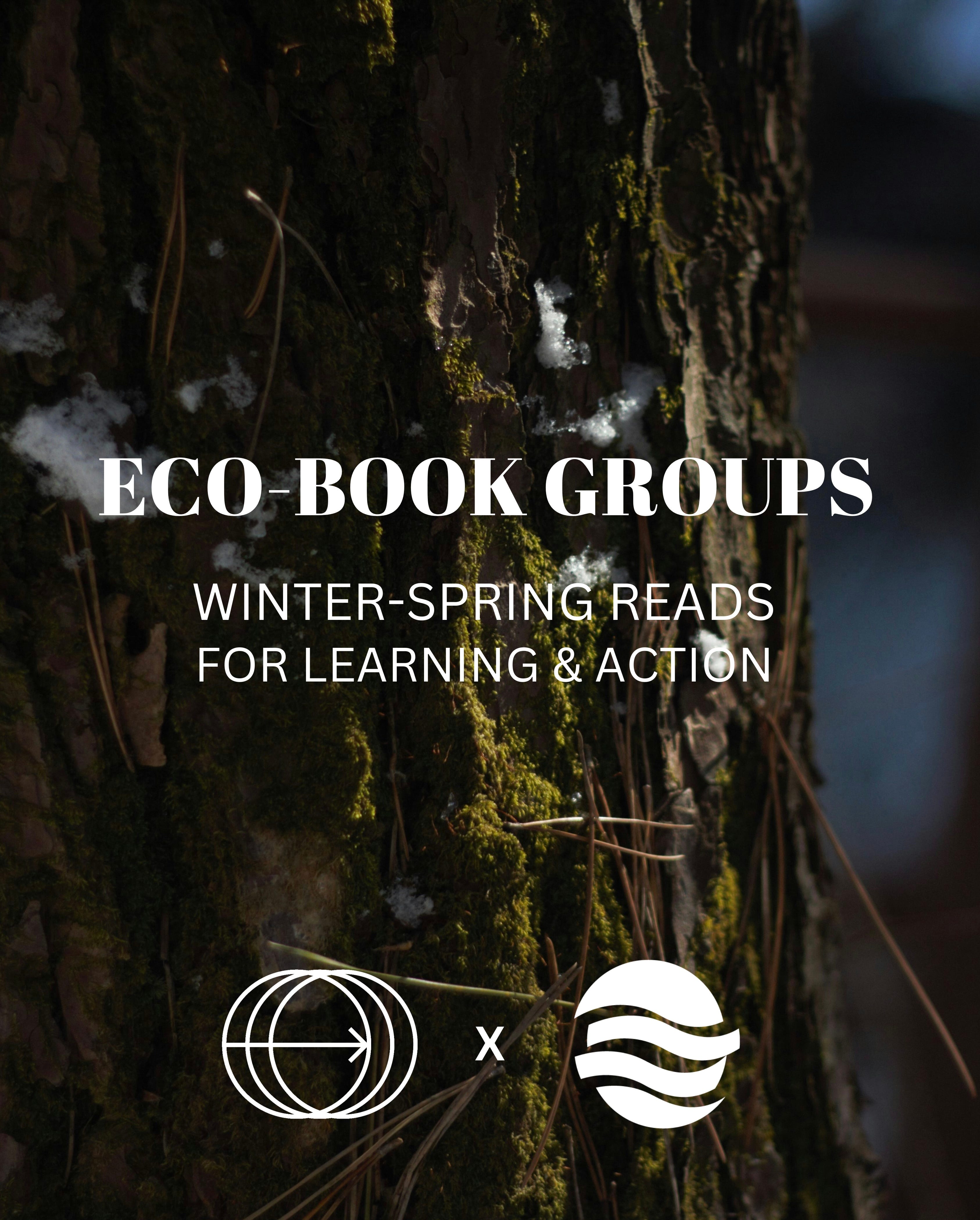
This Winter-Spring I’m running another series of Eco-Book Groups, this round in collaboration with the Michigan Climate Action Network (MiCAN). You are invited to join any of the four discussions, each on a different book. Open to anyone who is down to discuss environmental topics and actions in a supportive online space. Free to join, virtual, held weeknight evenings. Our lineup:
January 14: You Are a Sacred Place: Visual Poems for Living in Climate Crisis, by Madeleine Jubilee Saito (read on)
February 10: Human Nature: Nine Ways to Feel About Our Changing Planet, by NASA scientist Dr. Kate Marvel
March 25: A Psalm for the Wild-Built, by Becky Chambers
April 13: What If We Get it Right? Visions of Climate Futures, by Dr. Ayana Elizabeth Johnson (a third-time group selection; it’s that good)
(More details and sign up; Instagram post.)
Art That Recalibrates Our Spirits: An Interview with Madeleine Jubilee Saito
The first read of this Winter-Spring series is this coming Wednesday, January 14th on You Are a Sacred Place: Visual Poems for Living in Climate Crisis by Madeleine Jubilee Saito.
Madeleine is a talented artist who makes experimental comics about the climate crisis and the sacred and lives on Duwamish land in South Seattle.
Madeleine will join the book group to read, talk about her work, and take questions. (No, you don’t need to have read in advance; the session will start with a visual reading.)
As an introduction to her work, and on the themes of this newsletter, here is a conversation Madeleine and I had for a podcast episode in 2024. (Madeleine and I are both part of Christian traditions. Those who similarly identify may be interested in the episode, on living with grief and hope.) The themes remain relevant to this moment.
This interview was conducted in January 2024 and condensed for clarity.
NRB: How would you describe your art?
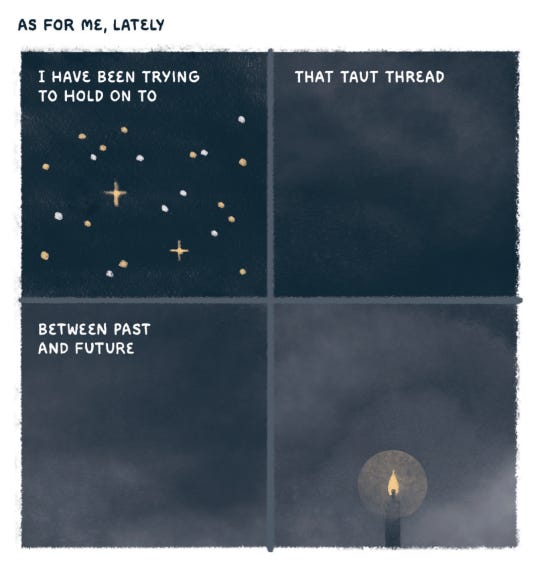
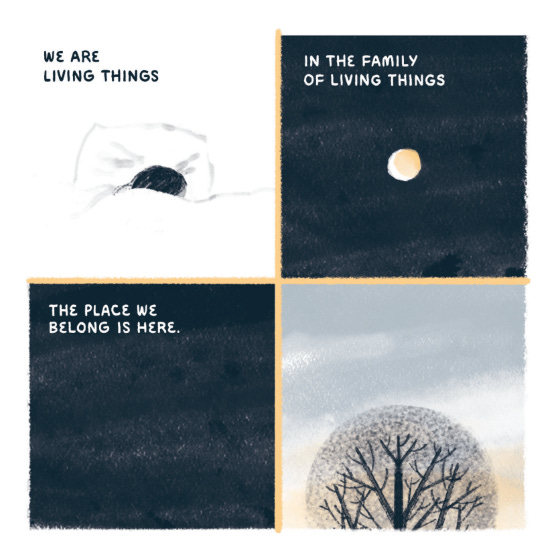
MJS: I am part of a tradition called poetry comics or experimental comics, where we use the visual language of comics — which is panels, words and images that are read in sequence, but we use them to make something that’s more like poetry, or like the Psalms. So it functions more like a singer-songwriter than a superhero comic. I make comics exploring the things that I’m interested in, which is questions of our collective life of political questions, spiritual questions, emotional questions.
In your art, you evoke the beauty, precarity, and interconnectedness of the world, human and beyond human. You address what it feels like to be “a living thing in the family of living things.” And you address hard truths about the climate crisis and its causes. What role do you want specifically your work to play?
I think I got “the family of things” from Mary Oliver — it’s such a beautiful turn of phrase.
Early on as an artist, I was very focused on exactly what I wanted someone to receive from my art, how I wanted them to experience it. As I’ve grown, I am doing my best to steward the gifts of drawing and writing and just do my utmost to make a good work of art that expresses something true.
I have caught some glimpses of how my work is kind of a spiritual care for people. I’m not particularly interested in arguing to convince anyone. I think that most of what I’m saying is things that people already know, deep down. And so I see my work as something that sort of draws out what that quiet voice is already saying to people and gives them a space to feel it and think it. And hopefully space to grieve — space to feel love for each other, for our world, for [the divine].
And, I hope that there is a strength that comes on the other side of being able to grieve and being able to access that love.
What role do you see for art generally to play in the climate movement?
Something that feels important to me is the way that art about climate—and especially art that is emotional and spiritual—is a sort of act of resistance against the framing of the climate crisis that has been pushed by oil and gas interests and powerful people.
Starting in the 1960s, we see oil and gas executives and the American Petroleum Institute pushing a very effective narrative, which is: the climate crisis is a matter of science. It needs to be kept in a very tight realm of scientific inquiry, and there’s no space for emotion, there is no space for thinking about political collective action. There’s no space for moral, spiritual, religious concerns.
And so I think, bringing art into that, just by nature of what it is, starts to crack open that lie that the climate crisis is this exclusively scientific and apolitical question. Art opens the reality that, no, this is something that is happening to us. This is something that powerful people are doing to us and to other less powerful people.
And any time we encounter powerful people doing something to less powerful people, that is a question where we need our powers of emotion. We need our powers of thinking about how to act and resist collectively.
The way I see my art working in the climate movement is as a space to allow people to access emotions that might be blocked by denial a lot of the time. Emotions like grief, sadness, anger, rage, hopelessness, despair.
And then I hope that on the other side of those emotions, they can find hope and courage.
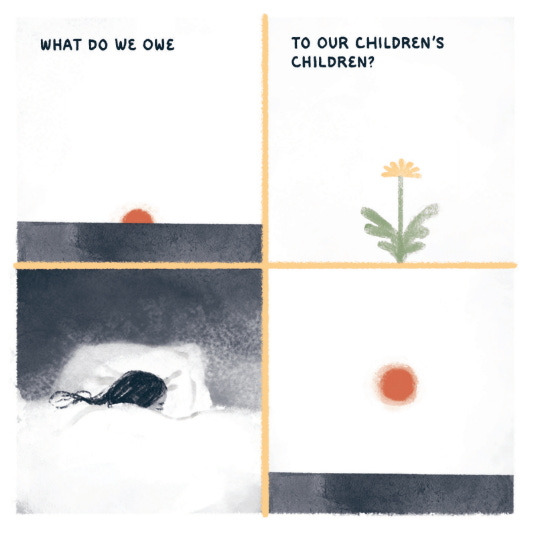
I see art as something that helps recalibrate our spirits.
What would you say to anyone who is just waking up to the realities of the climate crisis and ecological breakdown and having a political awakening?
For anyone just waking up to the climate crisis, you’re going to be having some very intense emotions, that will be very difficult. And so take care of yourself. Do what you need to move through sadness, anger.
I would also say there’s going to be a very strong force, both culturally and in things you encounter, that will mystify the underlying reality, make it a little foggy, where all this came from, how did this happen? How do we stop it? People who talk about the climate crisis without mentioning fossil fuels or capitalism. And I would encourage you to do what you can to understand the choices that go into this: the choices of powerful people and the political realities that are causing this.
I think for a lot of people who are just waking up to the climate crisis, some of the first emotions will be shame, guilt, despair. And a feeling of like: is it even good for me to be alive? Maybe it would be better if I weren’t here, because of my carbon footprint.
And I think what I want to say is—especially if you are also a person of faith, you know—it is good that you are here; you are made in the image of God.
Look into why things are set up this way. Why do we live in a world where it feels like humans shouldn’t exist? Who set up this system where we have to use fossil fuels to live? Who set up the system where we are stuck with a carbon footprint? A vast majority of people, especially people of the global majority, do not want this — and yet we’re here.
Who is making these choices? Who’s enabling this system?
And so as much as it I think can be incredibly spiritually important to work on bringing your daily life, your choices, your home into alignment with a livable future, I think it’s also incredibly important to start looking at the larger systems of why things are the way they are.
The number one piece of practical advice I’d give for anyone who’s just waking up is to look for an organization that will invite you to take meaningful political action and join their email list. It sounds very mundane. But it is just one of the most effective things you can do to actually begin taking action and moving collectively on this stuff: find an organization that will invite you to meaningful political action again, and again. Join their email list and make a commitment to open those emails and get involved as much as you can.
Let’s talk more about climate emotions. There’s kind of the common phrase: “action is the antidote to anxiety.” And some find this helpful. Others have cautioned that it can be harmful if you emotionally bypass. How do you think about the relationship between action and emotions?
If you’ve tried to do any very difficult group project [like collective climate action] for any extended period of time, you know that if you have stuff that you are dealing with that has not been dealt with, it will come out in a group project and it will harm things long term.
I think that finding resources to care for yourself, to take care of your emotions, to learn to regulate, is an incredibly essential part of being ready to take action in community.
I think that taking action can be an important part of what it means to live a life in alignment with your values. And that can be enormously pleasurable. But I don’t think it will solve deep underlying issues caused by trauma. And so I never prescribe action, especially collective action, as the antidote to anxiety.
I think if there is one non-therapy thing that I would prescribe for people with climate anxiety, it is learning about the system so that you can begin to see the patterns. Part of what caused me a lot of anxiety about climate (and many other things) was feeling like this was all out of nowhere. It felt unexpected.
When you begin to learn political history and see the history of environmental legislation, what has stopped environmental legislation? How have people responded to environmental movements in the past? You begin to see patterns, like: people in power will very rarely take action to help people with less power. People in power, especially in the U.S., will almost always do everything they can to protect the financial interests of business owners and the powerful. And once you can see that pattern, it becomes a lot less shocking, you get less of a new wave of anxiety every time. For example, Biden approves a pipeline or an oil project. There’s still the grief and anger, but there’s less of the anxiety of not knowing what’s to come. Because you now have more of a framework and understanding of how these patterns work as systems, not just as random, one-off scary things.
For further engagement
Thanks to Madeleine for her words. I’m excited for you to become acquainted with her work if you’re not already:
Purchase You Are a Sacred Place
Get to know Madeleine’s work
Follow Madeleine on Instagram
Again, you’re invited to join a discussion with Madeleine this Wednesday, January 14th on her book You Are a Sacred Place, and themes of activism, art, and climate justice. It is not necessary to pre-read the book or have a copy to benefit from the conversation. More details and sign up for a spot here.
A better vision than eco-fascism
Whether or not you make it to the discussion, take the time to sit with this post Madeleine did:
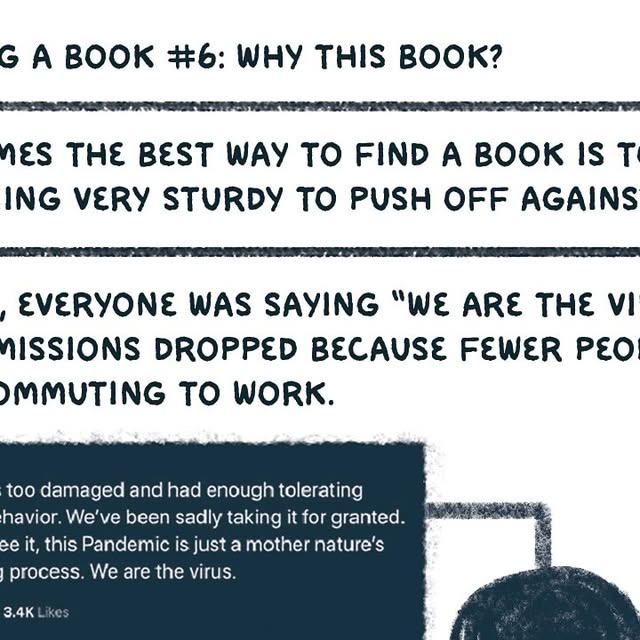
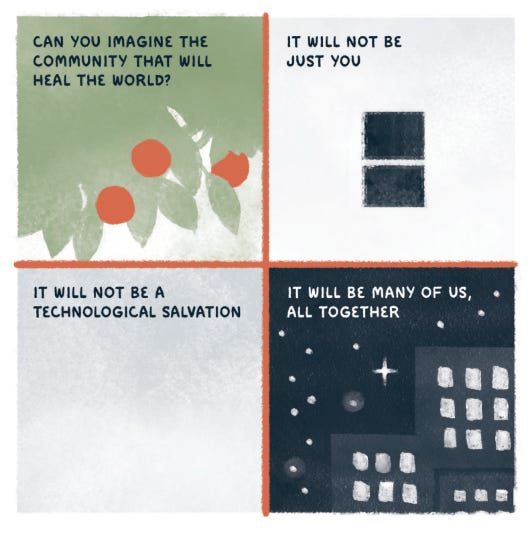
In it she summarizes and challenges the impoverished, fearful worldview and narrow vision of eco-fascism. I’ve talked about eco-fascism on here before. It used to be more of a future worry. Now I think we’re fully in it. We ought to beware of any political logic that implies it and thoroughly repudiate it. To do that, we need to understand what it sounds like (usually clearing some people out of the way for others, under the pretense of environmental care; usually paired with forms of supremacy).
But the antidote is also to know what its counter sounds like: the goodness of human existence, of any and all of us being here; that people’s existence is not the problem; humans are not inherently apart from or against nature; we are nature, part of a relational ecosystem. This is why Indigenous existence—and resistance—stands in stark contrast to eco-fascism.
At a moment in which wealth and power are concentrated in the hands of the few, at a time when many are wondering about the legacy of humans on this planet, now is a good time to pay attention to these narratives and interrogate where their respective visions will lead us.
In Circulation
What I’ve been sitting with or has been moving me lately:
Working on: goals for 2026, including more presence and fewer screens (for example: logging something I noticed with each Strava activity)
Reading:
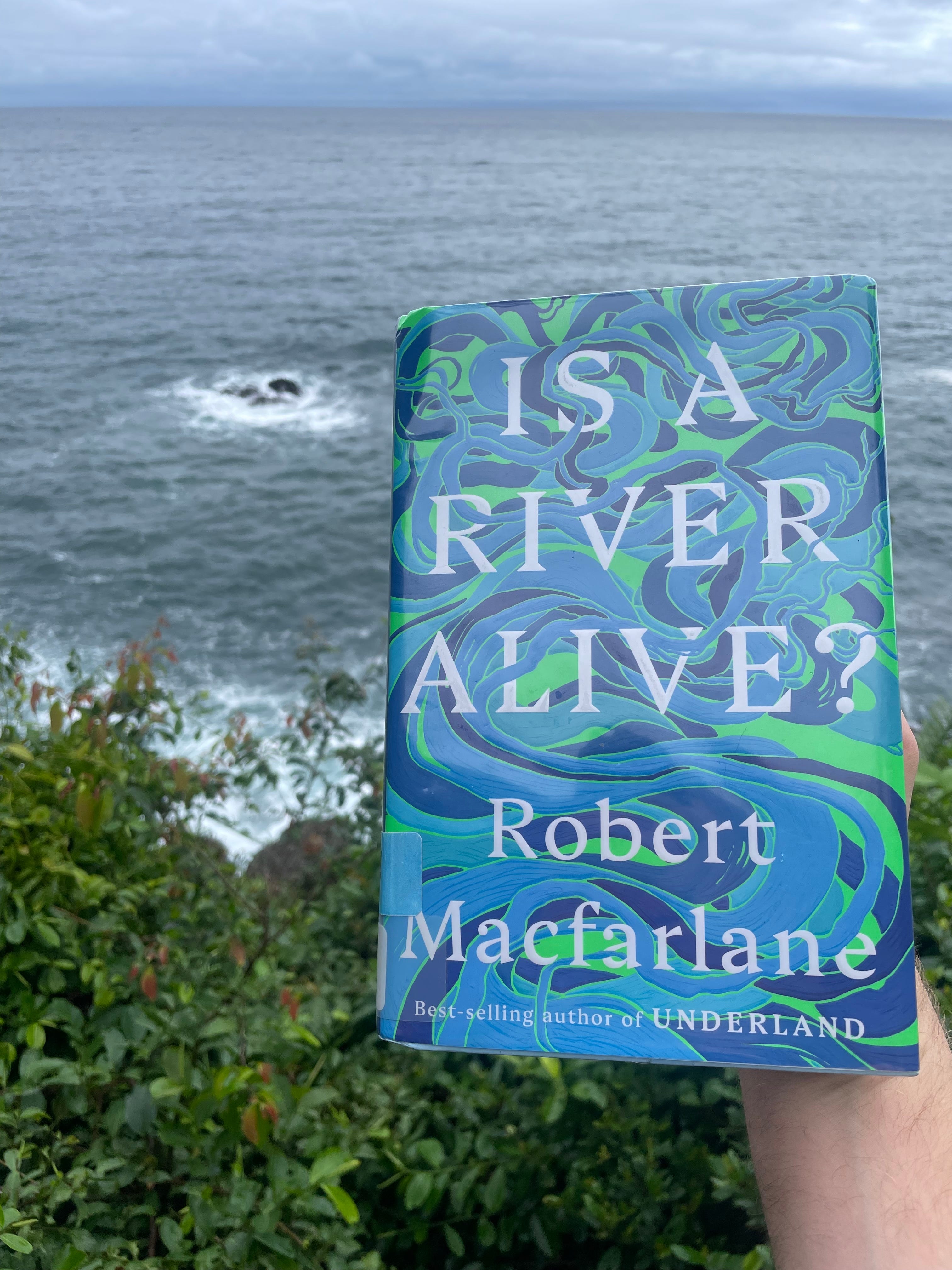
Is a River Alive? By Robert Macfarlane. Words make worlds, and this book was filled with some of the most gorgeous, time-halting, worldview- altering sentences I’ve read in a long time. Equally a pleasure and an urgent summons to listen. The book, and its main question, will keep stirring and swirling within and around me, I’m sure. Thanks to Avery David Lamb for the strong recommendation, and for his lovely (and short) review.
This made the podium for my top reads of 2025, along with The Message and One Day, Everyone Will Have Always Been Against This.
“AI Will Only Intensify Climate Change. The Tech Moguls Don’t Care.” Like many, I was hoping to forestall the AI and data centers fight—so much else is going on—but wham, there’s late 2025 for ya. The urgency climate activists feel in limiting short-term emissions derives from a knowledge that we’re rapidly depleting our carbon budget as it is, even without this new source foisted on us by the tech overlords.
Listening to: Song of the Cedars, which is a companion song to Is a River Alive? But also NATURE as an artist. (Spotify’s ICE contract has ended for now but I’m still looking to move…)
Learning: how to sew. Another of my 2026 goals. I’m about to take a class offered by a community org. The process might not be pretty at first but I’m determined.
If you feel so inclined, I’d love to hear anything you’ve had circulating in these categories (or others!). Just hit reply.
Thanks for reading. If you found this post beneficial, I’d appreciate a quick like or share—it helps build momentum and community. To learn about future events I’m hosting, watch this space or subscribe to the Movement & Meaning events page.